Kineon: Wearable Red Light Therapy For Lasting Relief
Kineon makes the MOVE+ wearable red light therapy device, combining medical-grade lasers with red LEDs for targeted joint pain relief. A focused look at what sets it apart.

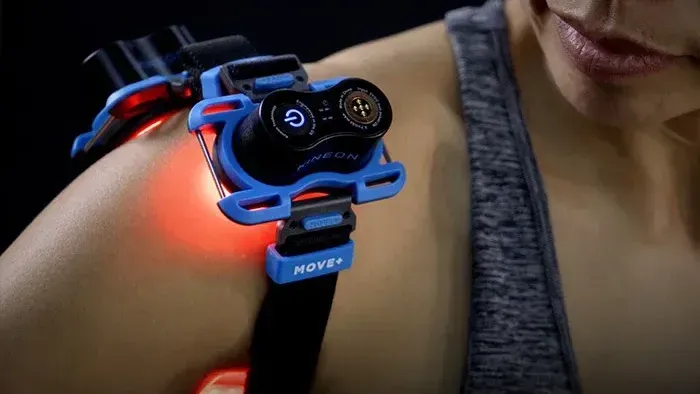
Most red light therapy devices ask you to sit in front of a panel for ten to twenty minutes, hoping enough photons scatter their way to the right spot. Kineon took a different approach: build a wearable that presses the light source directly against the joint, so the energy goes where the pain actually is. The MOVE+ is the brand's flagship product, designed for knees, hips, and other joints, and it targets the overlap between chronic inflammation and reduced mobility that so many active adults and aging patients navigate daily.
Kineon — At a Glance
What We Liked
- Combines medical-grade 808 nm lasers with 660 nm red LEDs for deeper tissue penetration than LED-only panels
- Wearable, joint-hugging design delivers light directly at the source of pain rather than from a distance
- Clinically backed wavelengths with 9,500+ supporting studies cited by the brand
- HSA/FSA eligible, making it accessible through pre-tax health spending accounts
What Could Be Better
- The strap could be easier to adjust
- Premium positioning means it costs more than flat LED wraps or belt-style alternatives
The MOVE+ Device and How It Works
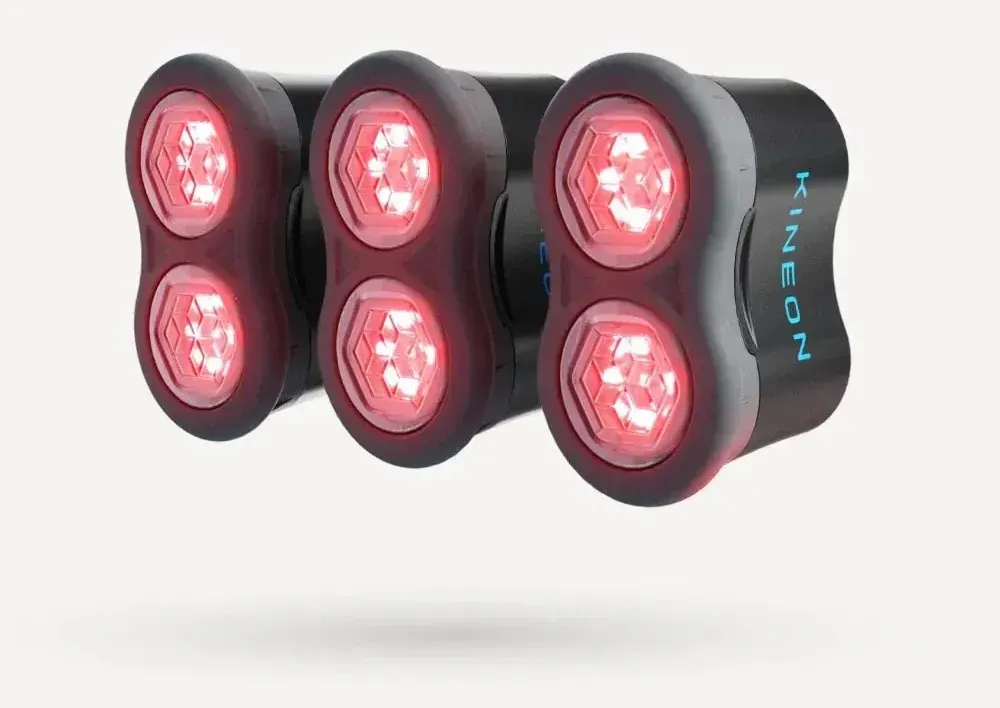
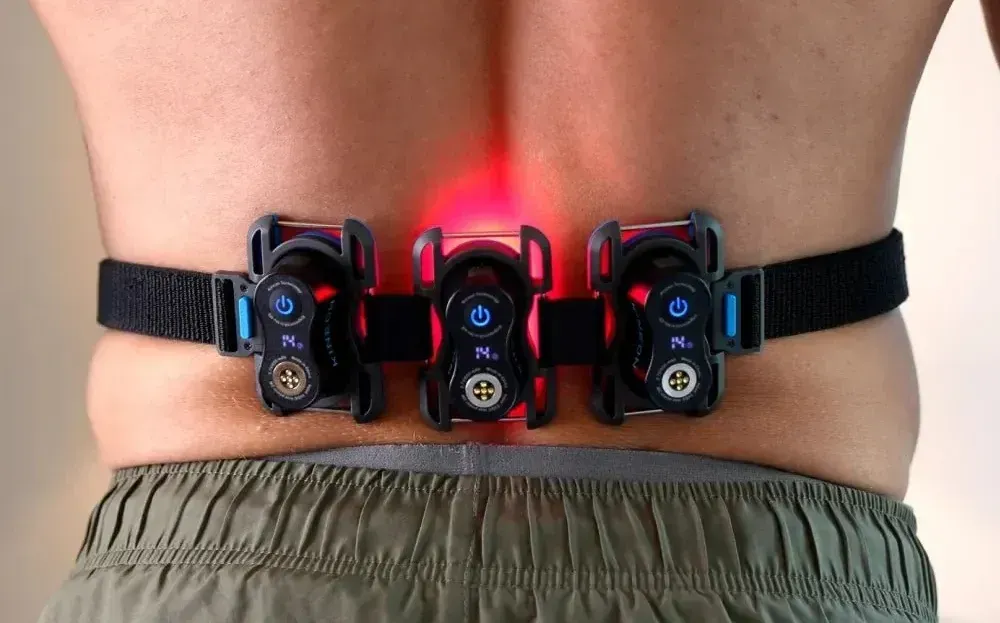
The core of what Kineon sells is the MOVE+ module system. Each module carries eight 660 nm deep red LEDs and ten 808 nm near-infrared lasers, per the brand's product page. That wavelength pairing is worth understanding: 660 nm red light works closer to the skin surface, supporting circulation and surface-level tissue, while 808 nm near-infrared penetrates deeper into joint tissue, cartilage, and muscle. The combination is sometimes called photobiomodulation, a process where specific light wavelengths trigger cellular energy production (ATP synthesis) and reduce inflammatory markers at the tissue level.
What separates Kineon from the broader red light therapy market is the inclusion of actual lasers rather than LEDs alone. Lasers deliver coherent, collimated light, meaning the photons travel in a tighter beam and penetrate tissue more consistently than the scattered output of an LED chip. Most consumer red light panels, wraps, and belts use LEDs exclusively. The MOVE+ uses a hybrid of LEDs and medical-grade lasers, which is a meaningful technical distinction, not just a marketing one.
Wearable Design vs. Panel-Based Therapy
The red light therapy category broadly splits into two camps: stationary panels (often large, wall-mounted or freestanding) and targeted wearables. Panels like those from Joovv or PlateLED deliver full-body or large-area exposure, which suits skin, recovery, and systemic inflammation goals. But for a specific joint, a panel approach is inefficient. You are irradiating a lot of tissue that does not need treatment to get light to the knee or hip that does.
Kineon's wearable format solves that problem by placing the modules in direct contact with the joint. The device straps onto the body, holding the diodes against the skin so the light travels the shortest possible path to the target tissue. This also makes sessions more practical: you can wear it while seated, reading, or doing light activity rather than standing in front of a panel. For people managing chronic joint conditions, that kind of daily compliance matters more than most specs on a data sheet.
Competing wearables in this space include the NovaaLab Novaa Light Pad, which uses 450 LED chips split between 850 nm near-infrared and 660 nm red, and the Hooga Red Light Therapy Belt, which runs 405 triple-chip diodes across a 21 by 5 inch treatment area. Both are LED-only. The Lifepro Light Therapy Knee Brace also uses 660 nm and 850 nm wavelengths and carries FDA clearance. Each of these covers more surface area than a MOVE+ module, but none incorporates lasers. Whether surface area or penetration depth matters more depends on the condition being treated.
The Science Behind the Claims
Kineon cites more than 9,500 studies in support of photobiomodulation, a figure that reflects the breadth of published research on the therapy rather than studies on the MOVE+ device specifically. The underlying mechanism, using specific light wavelengths to stimulate mitochondrial activity and reduce oxidative stress, is genuinely well-studied. The 660 nm and 808 nm wavelengths Kineon uses are among the most researched in the photobiomodulation literature, which is part of why they appear in clinical devices as well as consumer products.
The brand positions the MOVE+ as clinically backed and reports more than 75,000 users, per its product page. A 2026 Cybernews roundup of red light devices for knee pain named the MOVE+ Pro its pick for targeted, joint-level precision. Several Trustpilot reviewers describe meaningful reductions in chronic joint pain with consistent use. A typical timeline is one to four weeks for noticeable results, which aligns with how photobiomodulation research generally frames the therapy: cumulative and protocol-dependent rather than immediate.
HSA Eligibility
The HSA and FSA eligibility is a practical signal about positioning. Devices that qualify for health savings account spending are generally categorized as medical-adjacent rather than purely wellness. For buyers who have HSA or FSA funds available, that eligibility effectively lowers the out-of-pocket cost without changing the sticker price, which is a meaningful advantage over competitors that do not qualify.
Build Quality
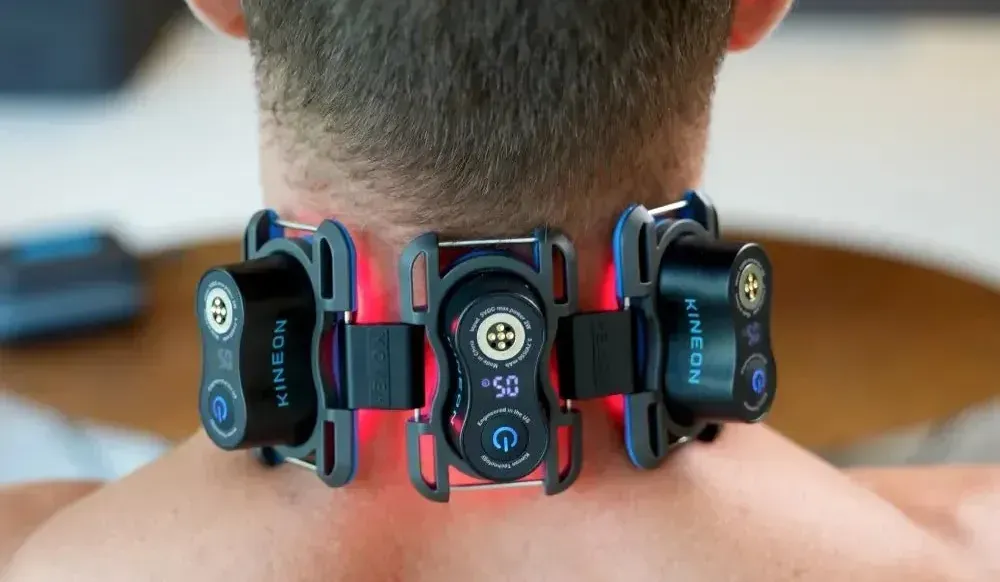
The strap is known to be a weak point for frequent users who like wearing it on the tighter side, and Kineon has a good reputation for taking care of customers who experience this issue. The modules themselves, with their laser and LED arrays, are the expensive and technically complex components. The strapping system is the mechanical weak point, and it is the part that takes the most daily wear. Buyers who use the device frequently should treat the straps as a consumable part of ownership rather than a permanent fixture, and treating it kindly could go a long ways towards helping with longevity.
Vetted Verdict
If you are managing chronic joint pain and you want a device that goes beyond what a standard LED wrap can deliver, Kineon's MOVE+ makes a credible case on technical grounds. The laser-plus-LED hybrid at clinically studied wavelengths is a genuine differentiator from the flat LED panels and belt-style wraps that dominate this category. The wearable format makes consistent daily use realistic, and HSA/FSA eligibility can make it more accessible. That said, this is not a casual purchase: it sits at the higher end of the consumer red light market, and the strap hardware has shown some wear-related issues in real-world use. For active adults, athletes in recovery, or anyone dealing with persistent knee or hip inflammation who wants targeted photobiomodulation rather than panel-based light exposure, Kineon is among the most focused tools available in this category.