LiTime 12V Lithium Deep Cycle Battery
The LiTime 12V 320Ah LiFePO4 battery promises serious capacity with self-heating and smart management built in. Here's who should buy it.

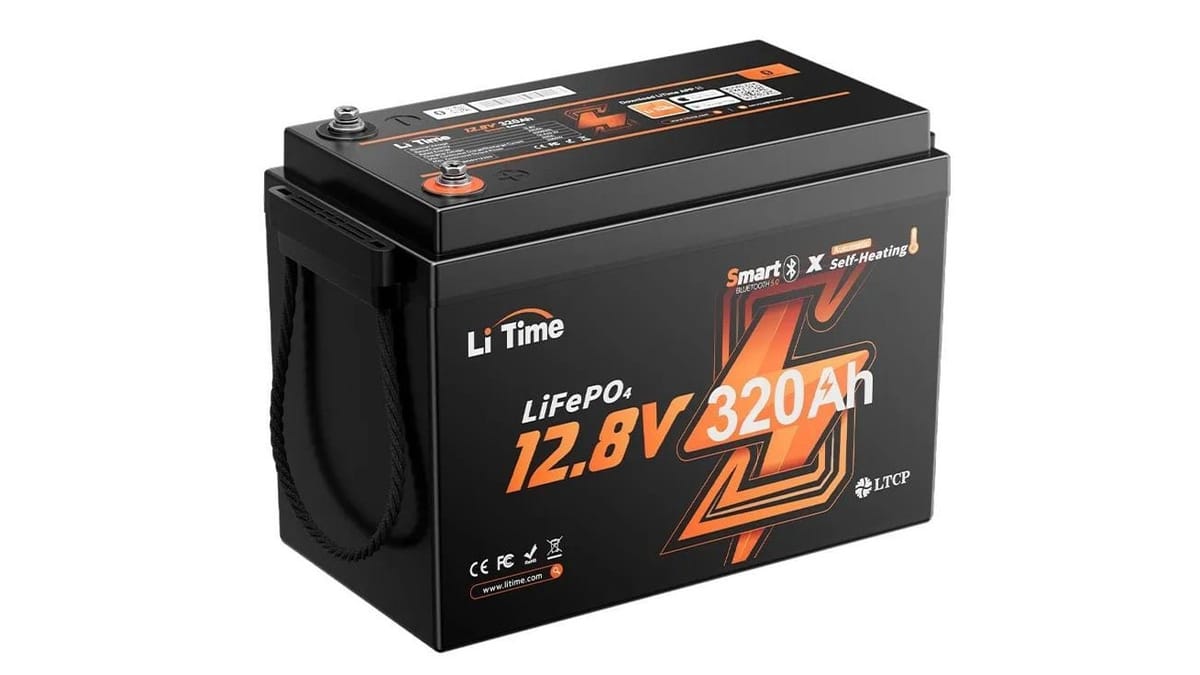
The LiTime 12V 320Ah Mini Smart Self-Heating Lithium Battery is a LiFePO4 deep-cycle battery built for RV, marine, solar storage, and off-grid applications. LiTime is a dedicated lithium battery brand that has carved out a real following in the RV and fishing communities, and this flagship 320Ah variant is one of their most capable offerings. The combination of high capacity, built-in self-heating, and a smart battery management system puts it in a different class than a standard group-size lead-acid replacement.
LiTime 12V 320Ah LiFePO4 — At a Glance
What We Liked
- Massive 320Ah capacity covers serious off-grid or multi-day marine demands
- Built-in self-heating protects performance in sub-freezing temperatures
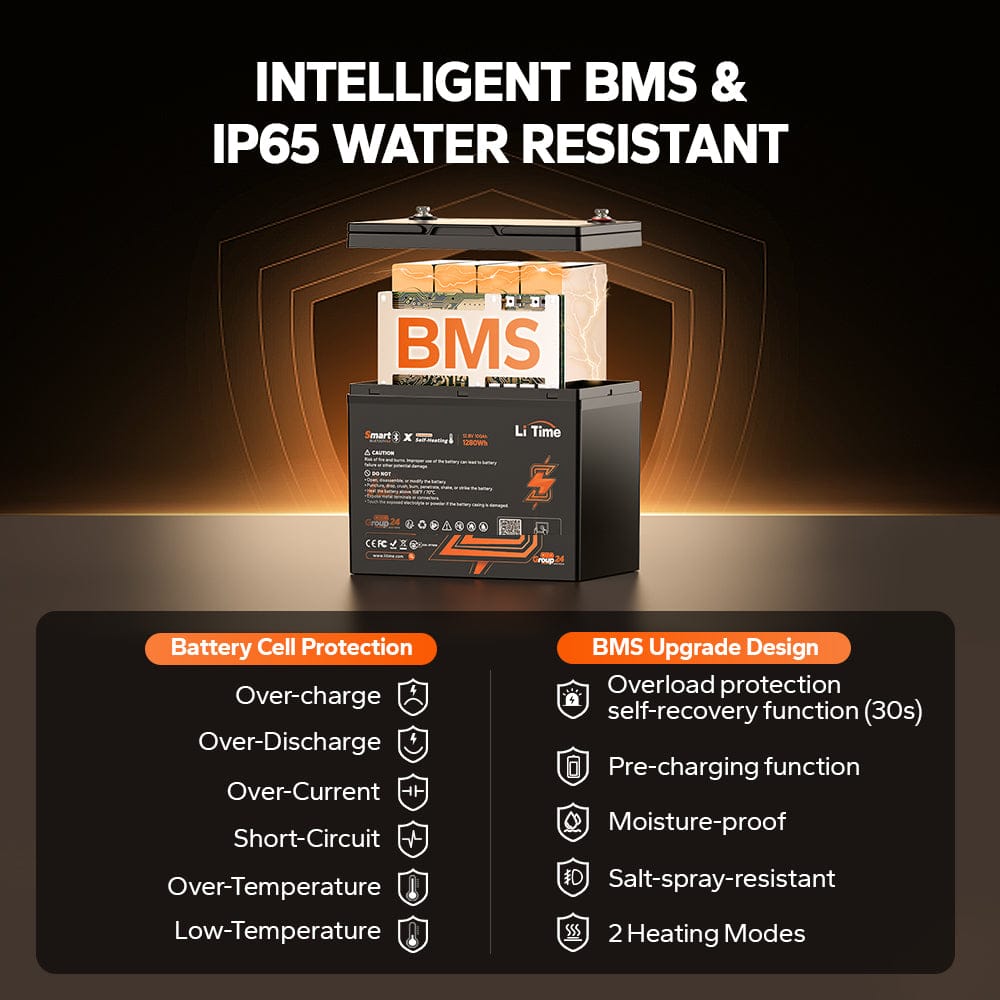
- Integrated smart BMS guards against overcharge, over-discharge, and short circuit
- Significantly longer cycle life than comparable AGM or flooded lead-acid batteries
What Could Be Better
- Higher upfront cost than lead-acid alternatives, though long-term value is strong
- Substantial weight and footprint may not suit tight battery compartments
What Makes LiFePO4 Different
Before getting into the specifics of this battery, it's worth understanding why lithium iron phosphate chemistry has become the go-to for serious off-grid and marine users. Traditional flooded lead-acid batteries and even absorbed glass mat (AGM) variants can only be discharged to about 50% of their rated capacity before you risk shortening their lifespan significantly. LiFePO4 batteries, by contrast, can be discharged to 80–100% depth of discharge without meaningful degradation, which means a 320Ah lithium battery delivers considerably more usable energy than a 320Ah lead-acid unit.
LiFePO4 chemistry is also inherently more thermally stable than other lithium-ion chemistries like NMC or LCO. There is no risk of thermal runaway under normal operating conditions, which matters a great deal when a battery is tucked into an enclosed RV bay or a boat's hull. LiTime leans into this safety profile explicitly across their product line, and it's one of the reasons the brand has built credibility with users who depend on their power source in remote locations.
Capacity and Real-World Power Delivery
At 320Ah, this is one of the larger single-battery units LiTime offers in their 12V lineup. To put that in practical terms: a typical RV refrigerator draws roughly 4–8 amps per hour depending on the model and ambient temperature. A fully charged 320Ah battery, discharged to 80%, gives you approximately 256 usable amp-hours. That's a full day of refrigeration, lighting, a CPAP machine, and device charging without breaking a sweat, even without solar replenishment.
For marine applications, particularly trolling motor setups, the math is equally compelling. A 55-pound thrust trolling motor running at medium speed draws around 20–25 amps per hour. This battery can sustain that load for well over eight hours of continuous use, which is a full day on the water for most anglers. Paired with a second unit in a series or parallel configuration, you're looking at a genuinely serious power bank for extended fishing trips.
Self-Heating Technology
This is the feature that genuinely separates the "Mini Smart Self-Heating" variant from standard LiFePO4 batteries. LiFePO4 chemistry has one well-documented weakness: charging performance degrades sharply below freezing, and charging a cold lithium battery can cause lithium plating on the anode, which permanently reduces capacity and creates a safety concern. Most lithium battery owners in cold climates have to either bring their batteries indoors overnight or accept reduced performance.
LiTime's self-heating system addresses this by automatically warming the battery cells before or during charging when internal temperatures drop below a threshold. The system draws power from the battery itself or from the charging source to activate internal heating elements. The result is that the battery can charge safely in sub-freezing conditions where a standard LiFePO4 unit would either refuse to accept a charge or risk damage. For RV users who camp in shoulder seasons, or anglers who fish through winter, this is a meaningful real-world advantage rather than a spec-sheet checkbox.
Smart Battery Management System
The integrated Battery Management System (BMS) handles the protective functions that keep a lithium battery alive over the long term. According to LiTime's product page, this includes protection against overcharge, over-discharge, overcurrent, short circuit, and high temperature. These aren't optional features in a quality LiFePO4 battery; they're the difference between a battery that lasts 2,000–3,000 charge cycles and one that fails prematurely.
The "smart" designation refers to additional monitoring capabilities beyond basic protection. Users can track state of charge, voltage, and temperature data, which is genuinely useful for managing a solar storage system or understanding how your load profile affects battery health over time. This kind of visibility used to require a separate battery monitor, so having it integrated at this capacity level adds real value.
Build Quality and Form Factor
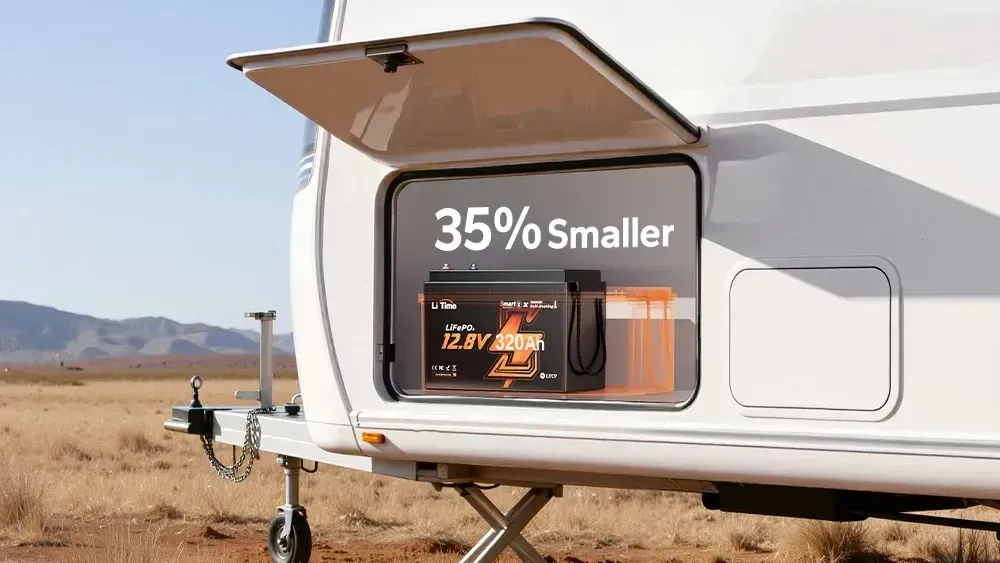
LiTime describes this as a "Mini" configuration, which refers to the physical footprint being more compact than a traditional Group 31 battery at equivalent capacity. That's a notable engineering achievement, because 320Ah is a lot of cells to package. The trade-off is that this battery is still substantial in weight; lithium is lighter than lead-acid pound-for-pound at equivalent usable energy, but a 320Ah unit is not light by any standard.
The casing appears to be a hard ABS-style enclosure based on product imagery, which is standard for this category. Terminal quality matters in high-current applications, and LiTime uses threaded stud terminals that accept ring connectors properly, which is the right call for marine and RV wiring. Cheaper batteries in this category sometimes use undersized or poorly plated terminals that corrode or fail under load.
How It Compares
The most direct competitors in this space are Battle Born, Renogy, and Ampere Time (now rebranded). Battle Born has a long-standing reputation in the RV community and offers excellent customer support, but their pricing sits at the premium end of the category. Renogy offers comparable specs at a similar tier to LiTime, though their BMS feature set varies by model. Ampere Time competes closely on price and capacity.
Where LiTime differentiates is the self-heating feature at this capacity level. Not every competitor offers self-heating in a 320Ah form factor, and for cold-climate users, that's a genuine deciding factor. LiTime also positions their pricing below the Battle Born tier while offering comparable or superior feature density, which makes the value case strong for buyers who've done the research.
LiTime 12V 320Ah Self-Heating LiFePO4 — Key Specs
| Spec | Value |
|---|---|
| Chemistry | LiFePO4 (Lithium Iron Phosphate) |
| Voltage | 12V |
| Capacity | 320Ah |
| Usable Capacity | ~256Ah at 80% DoD |
| Self-Heating | Yes (activates below freezing) |
| BMS | Integrated Smart BMS |
| Cycle Life | 2,000–3,000+ cycles (per LiTime) |
| Series/Parallel | Supports both configurations |
| Terminal Type | Threaded stud |
| Comparable Group Size | Group 31 footprint, compact form |
Who This Battery Is For
The LiTime 320Ah is built for users with serious, sustained power demands. If you're a weekend camper with a single 12V fan and a phone charger, this is more battery than you need, and a smaller 100Ah or 200Ah unit would serve you better and cost less. But if you run a residential-style refrigerator in a full-time RV, operate a live well and multiple electronics on a fishing boat, or are building a small off-grid cabin solar bank, 320Ah starts to make a lot of sense.
The self-heating feature specifically targets users in northern climates or high-altitude environments where overnight temperatures regularly drop below freezing. If you live and camp in the Sun Belt year-round, you're paying for a feature you may rarely need. For everyone else, it's the kind of protection that pays for itself the first time you wake up to a working battery on a 20-degree morning.
Vetted Verdict
The LiTime 12V 320Ah Mini Smart Self-Heating LiFePO4 battery is a well-specified, feature-rich option for RV owners, serious anglers, and off-grid solar users who need dependable deep-cycle power in variable conditions. The self-heating system and integrated smart BMS address the two most common failure points of lithium batteries in real-world use: cold-weather charging damage and cell-level over-stress. It's not the right buy for casual campers or anyone working with a tight installation space, but for users who've outgrown basic AGM setups and want a lithium solution that's genuinely built for demanding conditions, this battery deserves serious consideration. LiTime also offers multiple sizes across their 12V lineup, so if 320Ah is more than your system needs, there's a well-matched option at a smaller capacity too.