Teeter Inversion Table: Daily Pain Relief


We rarely take gravity into account when it comes out our health, but our spines fight gravity every day. Removing or actually reversing gravity's effects on the spine can result in surprising relief. The Teeter FitSpine LX9 is built for people who are looking for relief using predictable decompression at home. The LX9 supports up to 300 pounds and fits users from about 4'8" to 6'6". Teeter has been manufacturing inversion tables for decades, and this table is UL safety certified, covered by a 5-year warranty, and ships with comfort a lumbar bridge and acupressure nodes to enhance comfort. The long ankle lock handle, raised boarding platform, and the EZ Angle tether with simple presets make it sturdy enough for daily use.
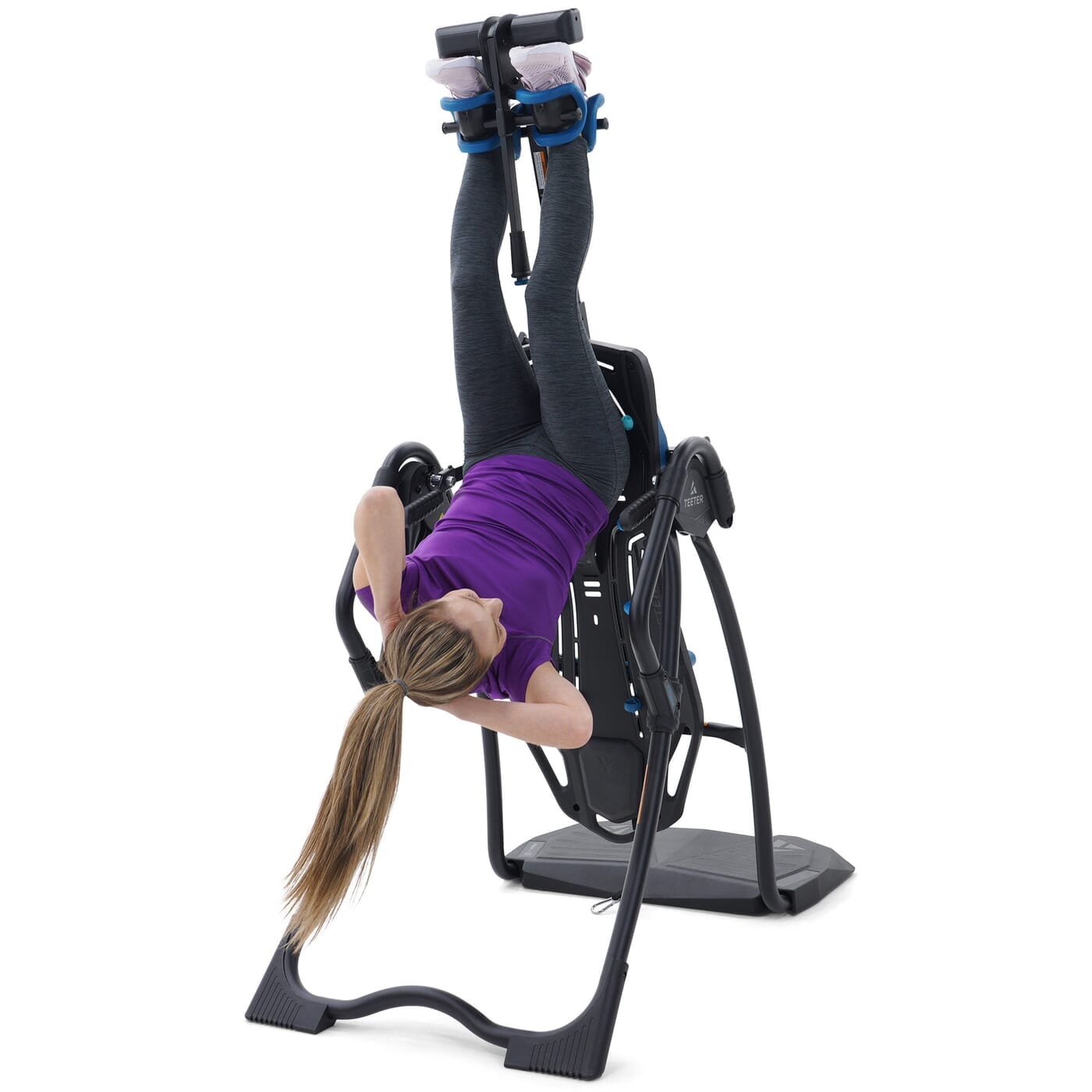
How an inversion table helps
If you sit a lot, lift a lot, or wake up feeling like your lower back is plotting against you, inversion can create space where your spine is being compressed. The LX9 lets you gently tip until gravity does a bit of traction for your discs and facet joints. It can provide short term relief for people suffering from sciatica, herniated disc symptoms, stiffness, or muscle spasms. The table isn't meant to replace a physical therapist, rather you are affording yourself a few minutes of decompression, a stretch for tight hips and hamstrings, and a way to calm spasms when they flare (always talk to a medical professional first).
People just starting off usually feel the effect most when they combine short sessions with light movement like ankle pumps, deep breathing, and a slow reach for the traction handles (rather than dead still hangs). It is common to feel lighter and looser right after a session, and that sensation can last long enough to get through work, a walk, or into an evening routine without the same nagging pain or discomfort.
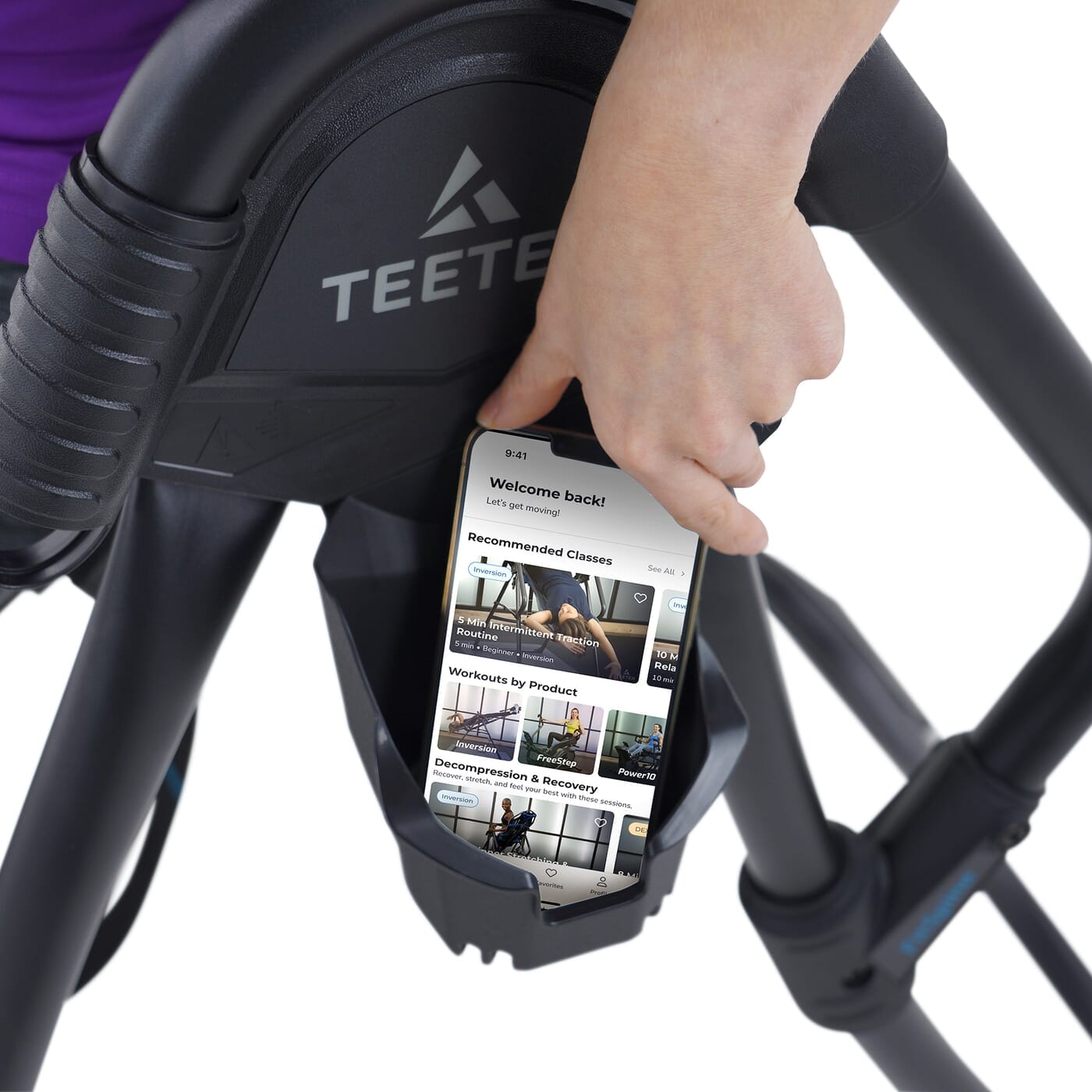
Teeter and the LX9
Teeter has been in the inversion world for decades and has made a name around safety and quality products. The LX9 sits at the top of their FitSpine line, which means you get the nicer touches that make daily sessions that much more enjoyable. The backrest is a firm FlexTech surface that slides and flexes so your spine can lengthen without sinking into foam. Under it is a floating suspension that adds a little give at in the right places.
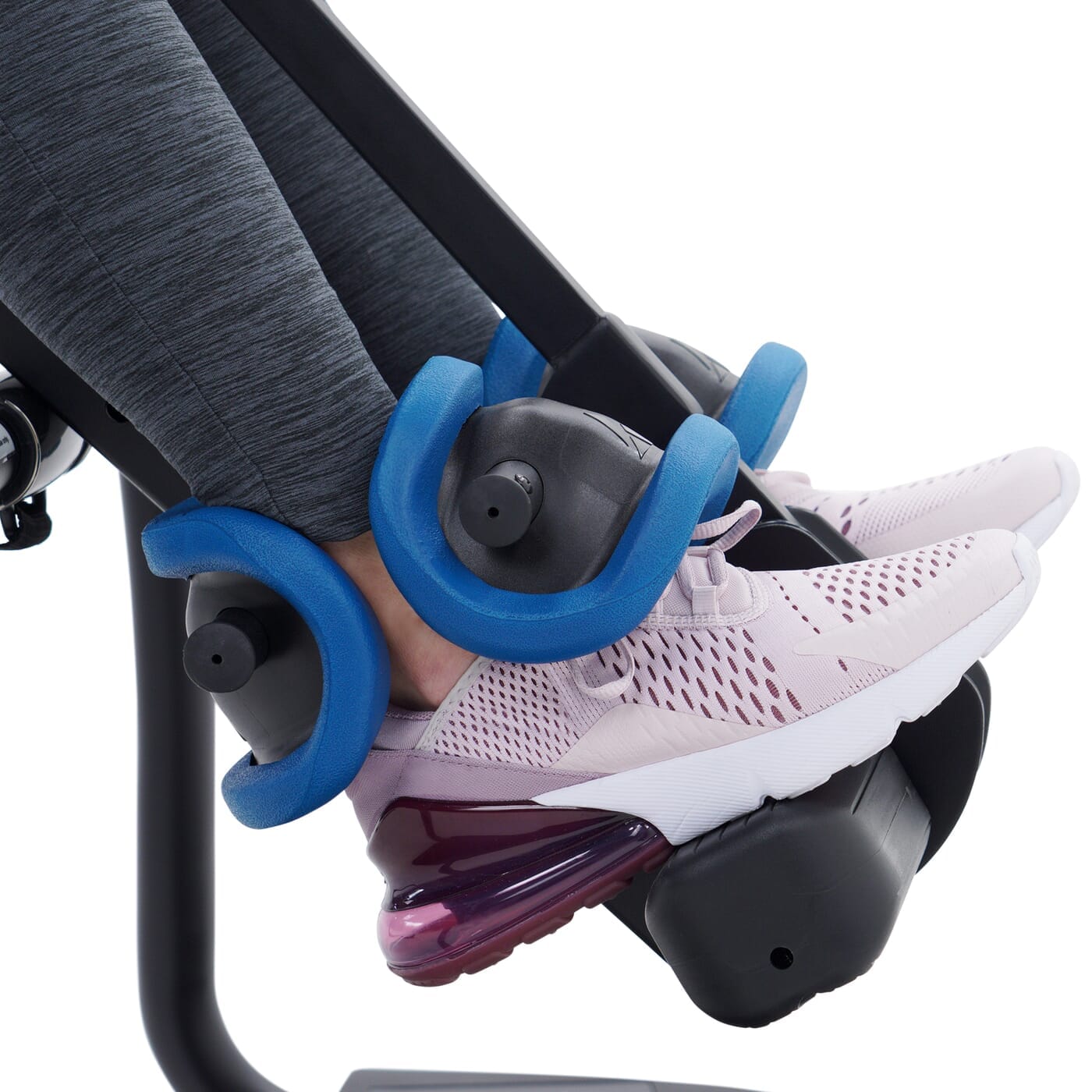
It was also designed with a raised boarding platform that makes stepping on and off more controlled, a storage caddy for your phone or remote, and long Stretch Max side handles that almost feel like guard rails. The blue ankle system is the Deluxe EZ Reach design. The clever design means that you do not need to bend much to lock in, and the wrap around cuffs spread pressure across more surface area (making them more comfortable). Acupressure nodes and a lumbar bridge are also included, so you once you're comfortable you can add targeted traction or a little pressure along the paraspinals (if you like that feeling).
Daily Use
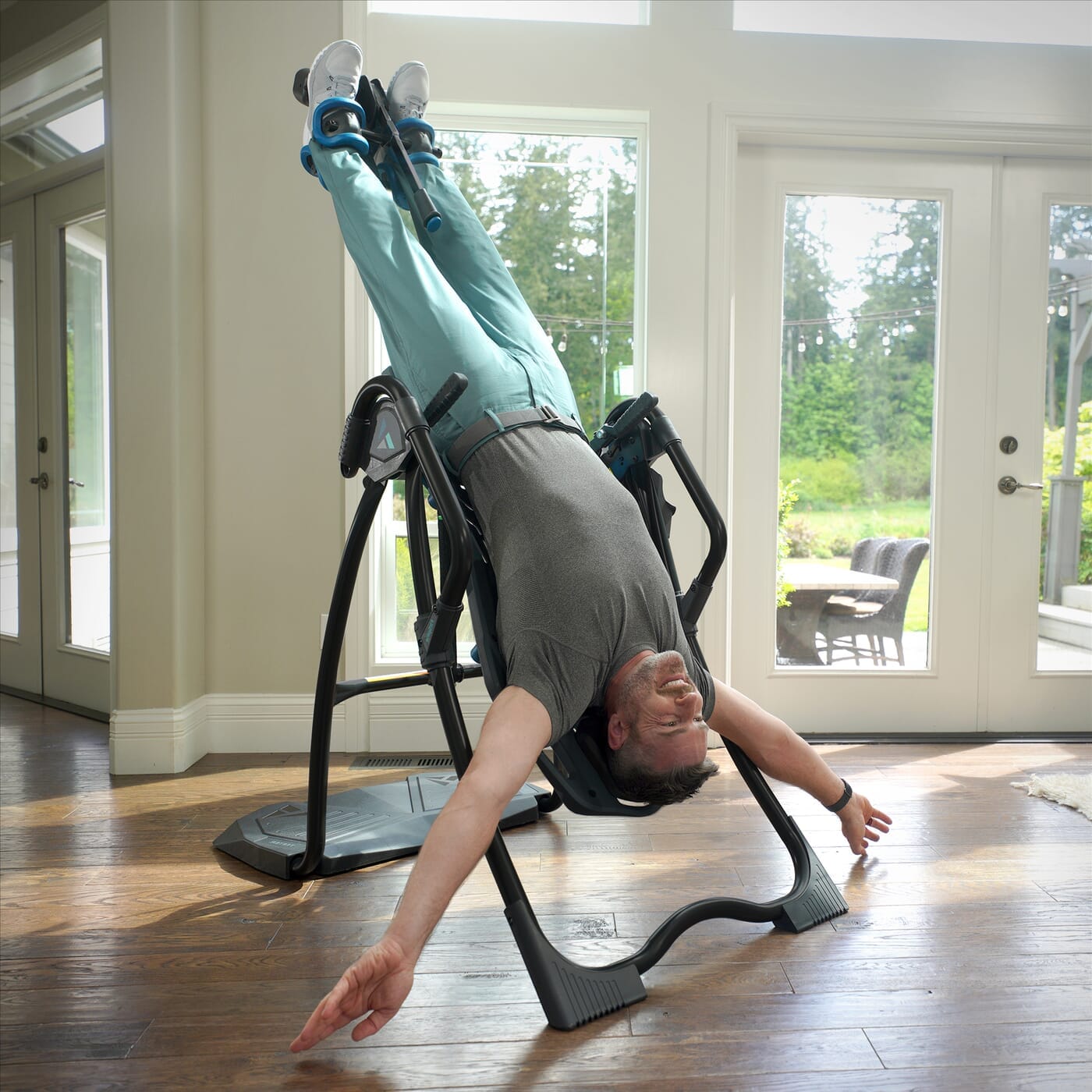
Control is everything with inversion. The LX9 gives you three simple ways to manage it. First is balance. Set your height correctly and the table pivots smoothly and is easy to control. Second is the EZ Angle tether with clear marks for 20, 40, and 60 degrees. Third is the handle layout. The long side handles and the short traction handles near the hips let you pull yourself deeper and ease back to flat with confidence.
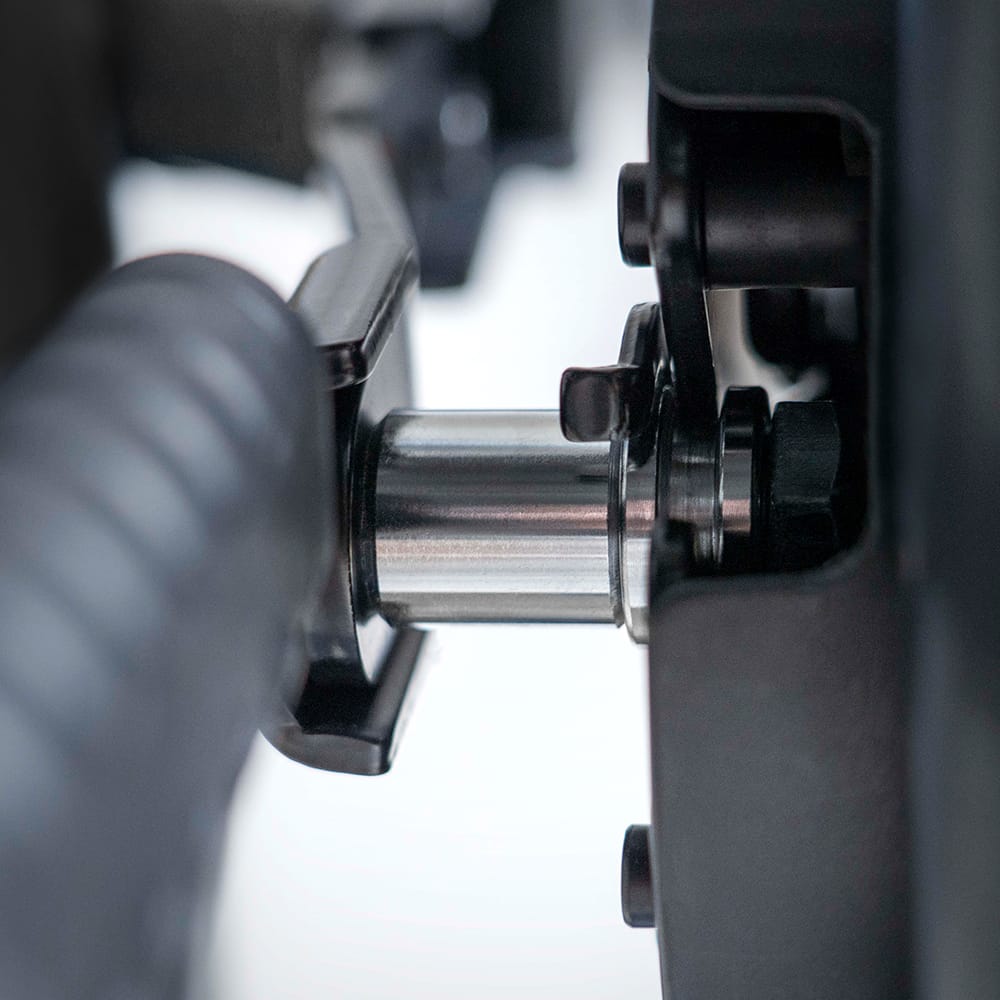
Compared to budget tables, the whole system feels better thought out and more sturdy. Metalwork is stout, the ankle lock has a reassuring click, and the secondary lock engages when you are upside down so you do not experience an unpleasant 'surprise release'. The end result is that you can focus on slow breathing and a little mobility rather than wrestling with the table. If you have ever tried lesser frame and it felt jumpy, this will feel like stepping into a much more substantial chassis.
Setup and getting started
Assembly is straightforward if you use the BILT app. Most of the big parts are preassembled, so it is more about unfolding, pinning, and snapping the tethers and handles into place. Expect to spend a short session getting it completely dialed. The table folds for storage, but it is a large piece of gear so most owners pick a permanent spot in a spare room or garage and leave it ready to go. Plus, with it already set up you can hop on for two minutes without thinking about it.
Your first week should be using it on easy mode and just getting familiar with it. Start at the shortest tether mark (around twenty degrees) and do one to two minutes, once or twice a day. Add gentle ankle pumps, then a light reach for the traction handles. If you feel good after a few days, bump the angle up a notch and stay with short sessions. Frequency beats duration for most people, and it should really fall into a regular habit or part of your daily routine.
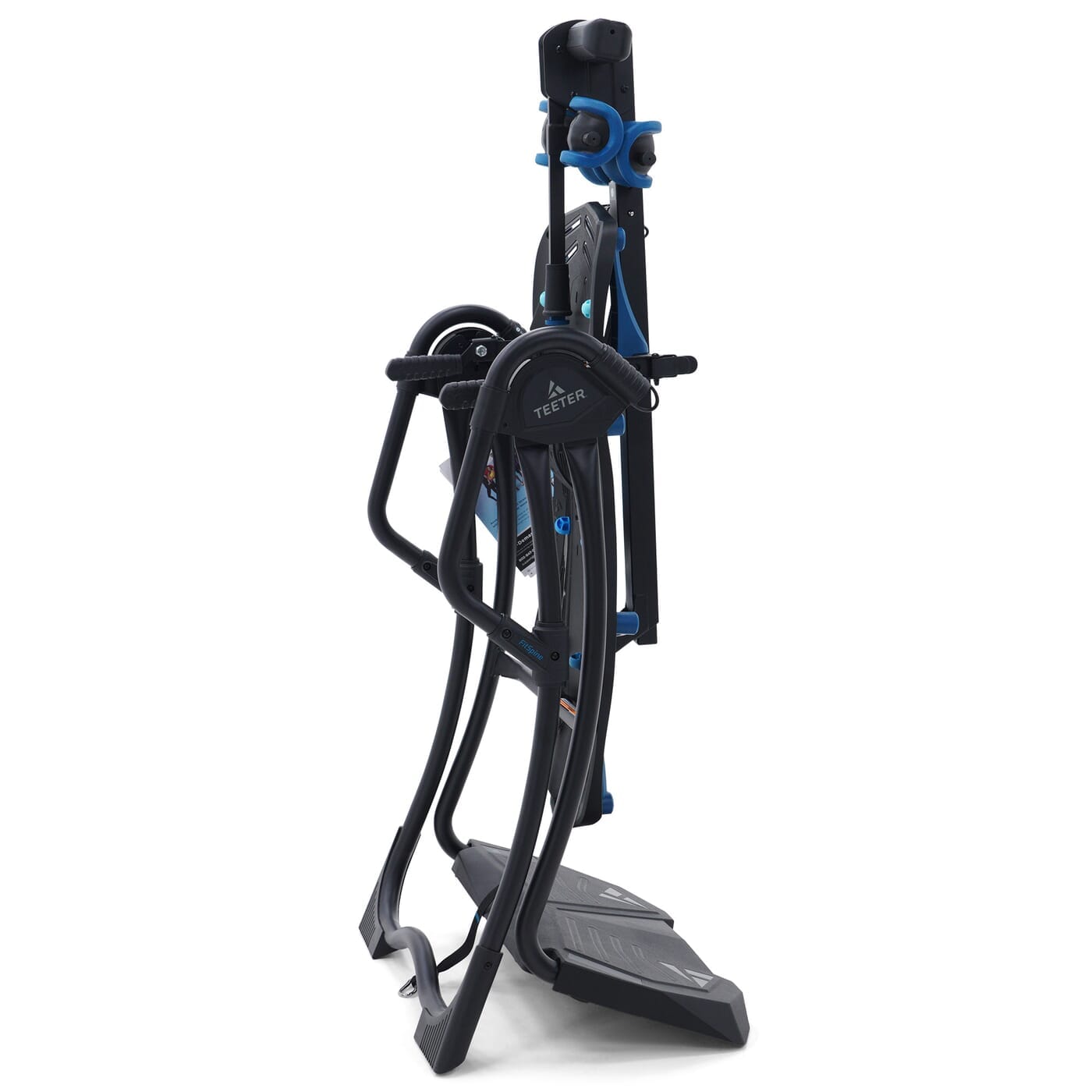
Comfort and control
Ankles make or break the experience with inversion tables. The LX9 cuffs are contoured and padded, and the comfort dial lets you find the sweet spot for your foot size. It helps to wear lace-up shoes with socks, which spread pressure and feels much better than barefoot. If it feels a little uncomfortable at steeper angles, reduce the angle and spend an extra week or two getting used to the sensation. It should be noted that many owners never go past forty or sixty degrees because they simply do not need more.
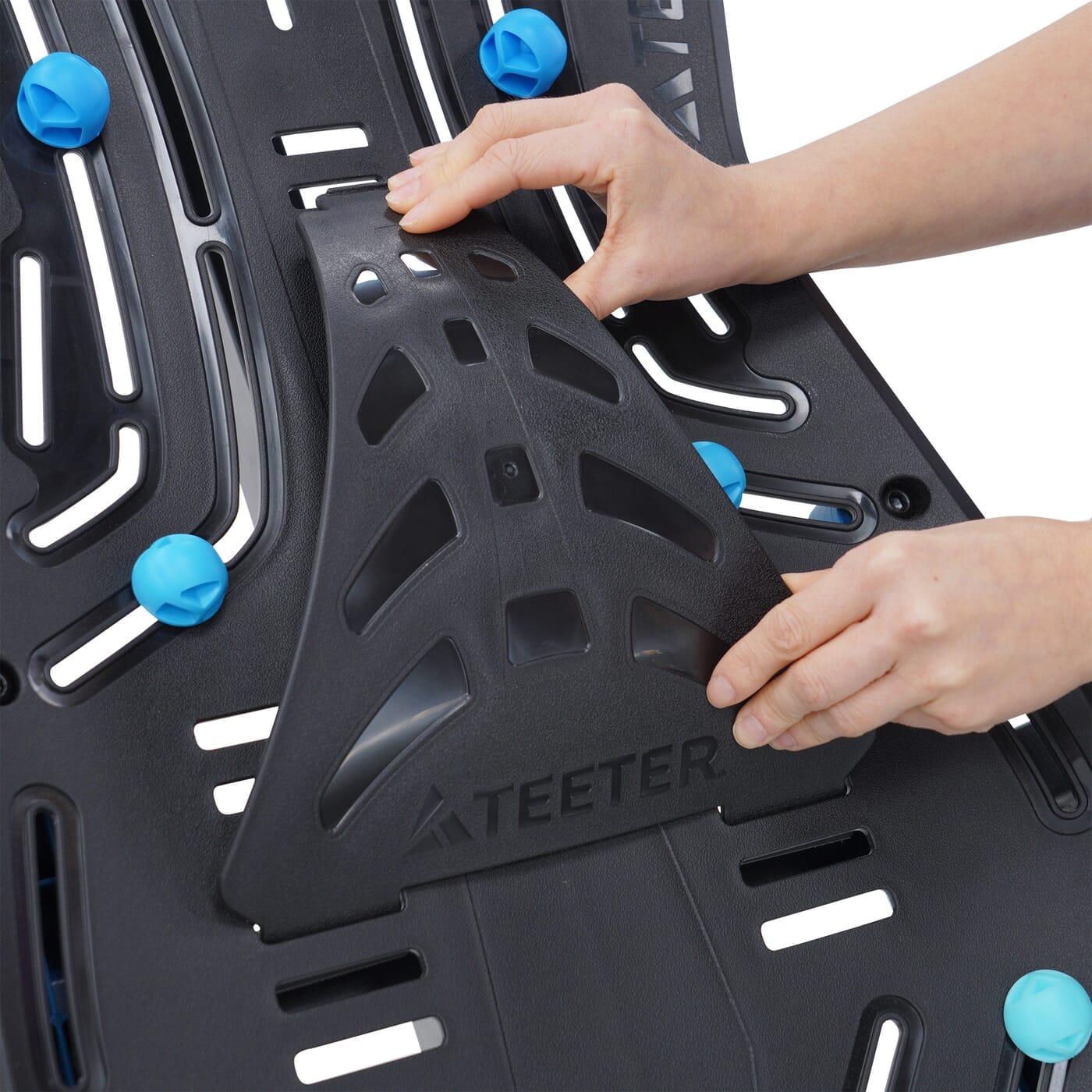
The backrest is intentionally firm. Foam beds can feel cushy, but they also swallow your shoulder blades and grab your shirt. The FlexTech surface lets your body slide a bit (so traction stays even). If you want more bite at the lower back you can pop in the included lumbar bridge. If you like a little trigger point pressure along the spine, place a couple of the nodes where you carry tension. You can mix and match the nodes until it feels just right.
How people actually use it
Many people use it in the morning for two to three minutes before a shower to shake off stiffness. In the evening, another two to three minutes can serve to decompress after work or a workout. During a flare, some people add a midday session if they can. A lot of users never go fully upside-down. They linger at a moderate angle, breathe, do a few pelvic tilts, and they are set to go.
When it works, it works fast. The first sign is often that your stride feels smoother when you step off. The second sign is less tugging in the glute and hamstring if sciatica is your struggle. It needs to be reiterated that this table is not a cure by itself. The people who get the best results use it in conjunction with other stretches, core work, walking, and appropriate exercises (as recommended by your physical therapist).
Safety essentials
Go slow at first. Set the tether to the lowest mark, keep sessions brief, and breathe. Use the long handles for control and stop if you feel light headed, dizzy, or a headache. Always lock the ankles before you tip and wait for the click. Shoes on, laces snug, cuffs adjusted to your ankle size. When you finish, come back to horizontal for a few breaths before you step off.
Some folks should check with a clinician first. That includes people with uncontrolled high blood pressure, glaucoma, heart disease, a history of stroke, fracture risk, or if you are pregnant. If you have an ongoing back condition, get guidance on the angle you should aim for and the duration you should be using the inversion table so you are not guessing. You can get a lot from twenty or forty degrees. Save full inversion for later if you ever need it at all.
Vetted Verdict
The Teeter FitSpine LX9 takes the nerves out of inversion. The raised platform, the long handles, the ankle system, and the simple tether marks make it friendlier than most tables, which means you are more likely to use it every day. Relief tends to show up fast and lasts longer when you pair it with basic mobility and smarter desk time. If you want a table that feels stable and is built for the long haul, the LX9 is a safe bet for your back and your routine.