Lectron Review: Affordable EV Chargers and Adapters for Everyday Drivers
Lectron makes EV chargers and adapters for home and on-the-go use, positioned as an accessible alternative to premium smart-charger brands. This review covers their catalog, build quality, and who they suit best.

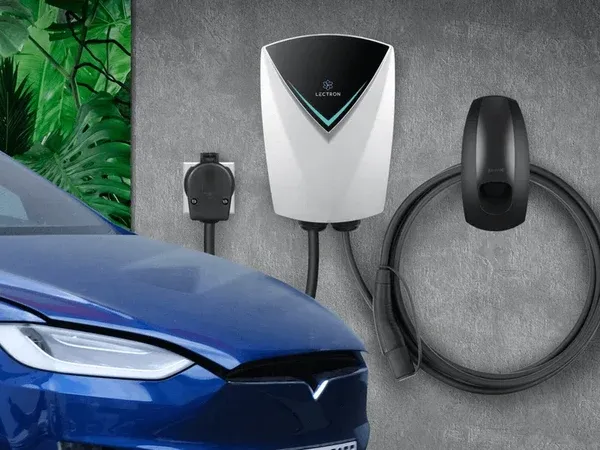
Lectron built its reputation by solving a friction point that every new EV owner eventually hits: the gap between what the car needs and what the outlet (or charging network) can actually provide. The company makes Level 1 and Level 2 portable chargers, hardwired home charging stations, and a lineup of EV adapters, including the Tesla-to-J1772 adapter that became one of its best-known products. Lectron positions itself well below the smart-charger tier occupied by JuiceBox and ChargePoint, targeting drivers who want reliable hardware without paying for Wi-Fi scheduling they may never use.
Lectron — At a Glance
What We Liked
- Broad catalog covering portable chargers, home stations, and adapters in one brand
- NEXUS home stations available in both NACS and J1772 connectors at 40A and 48A
- Adapter lineup includes Supercharger-to-CCS options that solve real network compatibility problems
- Sold at Walmart, Target, Best Buy, Home Depot, and Lowe's — easy to find and return locally
What Could Be Better
- No app or smart-charging features on most models, a real gap for drivers who want scheduling or energy monitoring
- Some owners have raised quality concerns, so it suits buyers who prioritize value over premium build assurance
What Lectron Makes
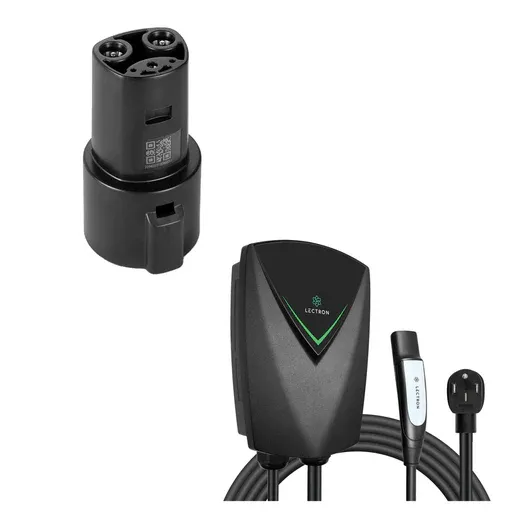
The catalog breaks into three clear buckets: portable chargers, home charging stations, and adapters. The portable side covers both Level 1 (120V) and Level 2 (240V) units, giving renters and apartment dwellers a path to faster charging without a permanent installation. For homeowners, the NEXUS line is the flagship, available in 40A NEMA 14-50 plug-in and 48A hardwired configurations, with your choice of NACS (Tesla-style) or J1772 connectors. Cable length on the NEXUS units runs to 23 feet, which is practical for garages where the panel is not directly beside the parking spot.
The adapter business is arguably where Lectron first made its name. The Supercharger-to-CCS adapter and the Vortex Plus variant let non-Tesla drivers access Tesla's Supercharger network, which is a meaningful unlock as that network continues to expand its open-access rollout. The company also offers the reverse direction, letting Tesla owners plug into J1772 stations. That two-way adapter strategy reflects a clear understanding of where EV drivers actually get stuck.
Home Charging Stations
The NEXUS line is the most direct competition to brands like Grizzl-E, JuiceBox, and ChargePoint. At 48A hardwired, the top NEXUS configuration delivers up to 11.5 kW, which is on par with what the JuiceBox 48 offers at its rated output. The ChargePoint Home Flex reaches 50A, edging ahead slightly, and the Grizzl-E Classic tops out at 40A with a notably long 24-foot cable. Lectron's 23-foot cable on the NEXUS is competitive without quite matching the Grizzl-E on reach.
Where the NEXUS diverges from those competitors is in what it leaves out. There is no Wi-Fi radio, no companion app, and no scheduling feature. For a driver who just wants the car charged by morning, that simplicity is a feature rather than a flaw. For someone managing time-of-use electricity rates or wanting remote monitoring, JuiceBox or ChargePoint will serve better. Lectron is making a deliberate choice here, and buyers should make the same choice consciously.
The dual-connector strategy (NACS and J1772 versions of the same station) is worth calling out. Most brands still ship only J1772 and expect Tesla owners to use an adapter. Lectron offers a native NACS station, which means Tesla, Rivian, and other NACS-equipped vehicles can plug in without a dongle hanging off the cable.

Portable Chargers
The portable lineup is where Lectron's value positioning is most apparent. A Level 2 portable that runs on a NEMA 14-50 outlet (the same 240V receptacle used by electric dryers) can charge most EVs at a rate that makes overnight stops at an Airbnb or a friend's house genuinely useful. Buyers on Best Buy and Home Depot have noted that the cords on Lectron's portable units feel thick and well-made, which matters for a cable that gets coiled and uncoiled regularly.
Portable EV chargers are a category where build quality shows up in real-world use faster than it does with a wall-mounted station. A charger that lives in the trunk and gets plugged into unfamiliar outlets needs robust connectors and a cable that can handle temperature swings. The owner feedback on cord quality is encouraging, though it is worth noting that some buyers have raised broader quality concerns, so this is a product line that rewards reading current reviews before buying.
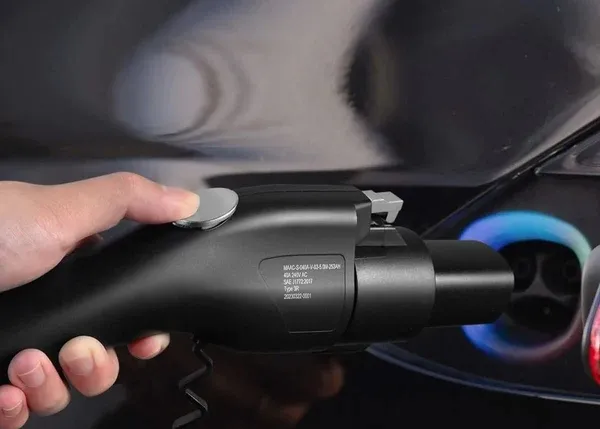
Adapters and Network Compatibility
The adapter lineup is the part of Lectron's catalog with the least direct equivalent from most competitors. The Supercharger-to-CCS adapter (and the Vortex Plus variant) addresses a real and growing need: non-Tesla EV owners who want access to Tesla's Supercharger network as it opens to all drivers. CCS is the dominant standard for non-Tesla vehicles in North America, so a well-built CCS-to-NACS adapter has a large potential audience.
Lectron's adapter credibility extends beyond the consumer market. The company reportedly supplies OE charger adapters to Volkswagen, Audi, and Porsche, which is a meaningful signal. Automakers running production-line supply chains have quality requirements that differ substantially from a consumer product sold at retail. That OE relationship does not guarantee every consumer unit is flawless, but it suggests the engineering team has operated at a standard above hobbyist-grade hardware.
Where Lectron Sells
Lectron products are stocked at Walmart, Target, Best Buy, Lowe's, and The Home Depot, alongside the brand's own site and Amazon. That retail footprint matters for a hardware product in a category where buyers sometimes need to return or exchange units. Being able to walk a charger back to a local Home Depot rather than boxing it for a return shipment is a practical advantage that brands sold exclusively direct-to-consumer cannot match.
Wide retail distribution also means competitive pricing pressure. Lectron is not positioning itself at the premium end of this category. The brand sits closer to the accessible middle, undercutting the smart-charger brands on cost while accepting the tradeoff of fewer connected features. For a first-time EV owner who finds the charger aisle at Best Buy overwhelming, seeing Lectron on the shelf next to a familiar brand name provides a kind of implicit endorsement.
Build Quality and Reliability
Owner feedback on reliability skews positive in aggregate. Multiple buyers on Best Buy and Home Depot describe the chargers as working reliably and consistently, and the cord quality gets specific praise. That said, a minority of owners have raised quality concerns based on their own experience, and it is honest to acknowledge that Lectron is not universally regarded as a premium build. The brand is not trying to be Wallbox or Emporia. It is trying to be the charger that works, costs less than the smart-charger tier, and is available at the store down the road.
For buyers who are comfortable reading recent owner reviews before committing, Lectron's retail presence makes that research easy: the Home Depot and Best Buy product pages accumulate verified purchase reviews that reflect current production quality. That is a better signal than any single review, including this one.
Vetted Verdict
Lectron suits the EV owner who wants a straightforward charging setup without paying for app features they will rarely open. If you have a Tesla or a NACS-equipped vehicle and want a native home station without the premium price of a smart charger, the NEXUS line covers that need cleanly. The adapter lineup is genuinely useful for drivers navigating a charging network that has not yet settled on a single standard. Buyers who want scheduling, energy monitoring, or remote access should look at JuiceBox or ChargePoint instead. For everyone else, Lectron is a practical, widely available option that solves the core problem: getting the car charged overnight, reliably, without unnecessary complexity.