Lymow Robotic Lawn Mower

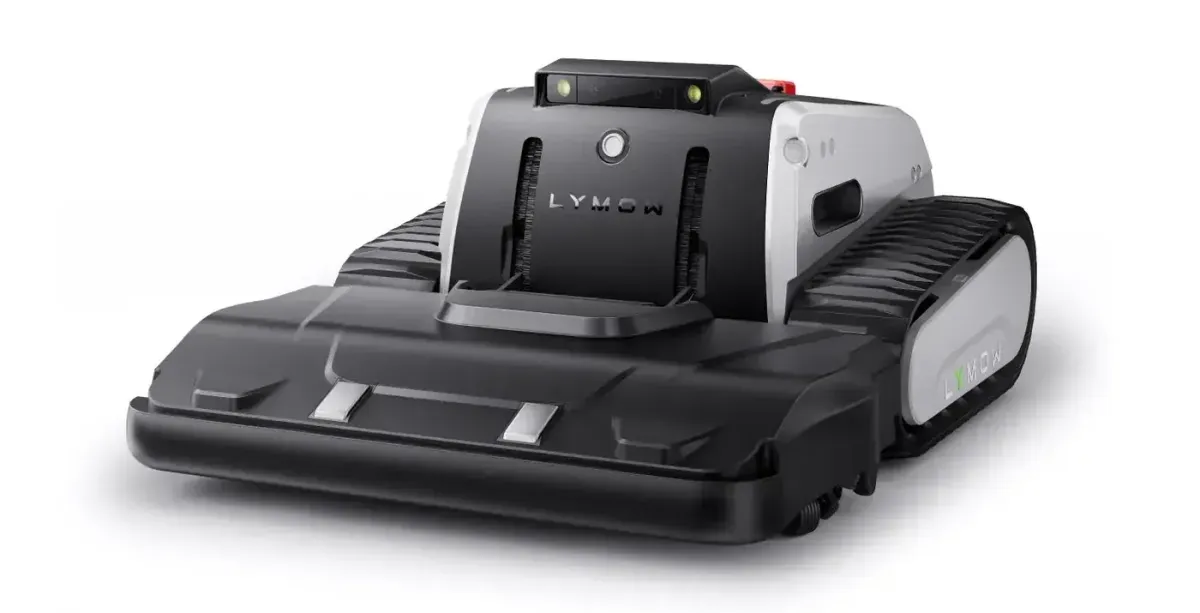
Lymow has entered the robotic lawn mowing market with a mower that has been tuned on North American lawn problems rather than small European courtyard assumptions. Its founder Gao Wangshu moved the early mower from a scissor-style cutter to high-speed mulching blades after feedback from Georgia and Florida users who wanted more power in wet and thick grass. This is not a dainty razor disc trimmer that slowly shaves tender turf. It is a seventy-eight pound tracked machine with a sixteen-inch rotary mulching deck, RTK plus VSLAM navigation, AI vision, ultrasonic sensing, an A380 aluminum frame, and a LiFePO4 battery. While it would work for grooming small lawns, it was truly designed with tougher weekly mowing in mind.
Cutting System
The cut system is the main reason to consider this mower. Lymow uses two SK5 steel rotary mulching blades with a listed hardness of fifty HRC, a floating deck, a cutting height range from 1.2 to 4.0 inches, and blade speed from 3,000-6,000 RPM. The deck also uses Cyclone Airflow to lift bent grass before the blade strikes, which addresses a common robot mower problem where tracks or wheels press grass flat before the cutter reaches it. The One Plus was tested in thick St. Augustine and the stronger 1,785-watt peak motor and airflow deck improved cut quality in wet growth, tall patches, and flattened turf.

Terrain
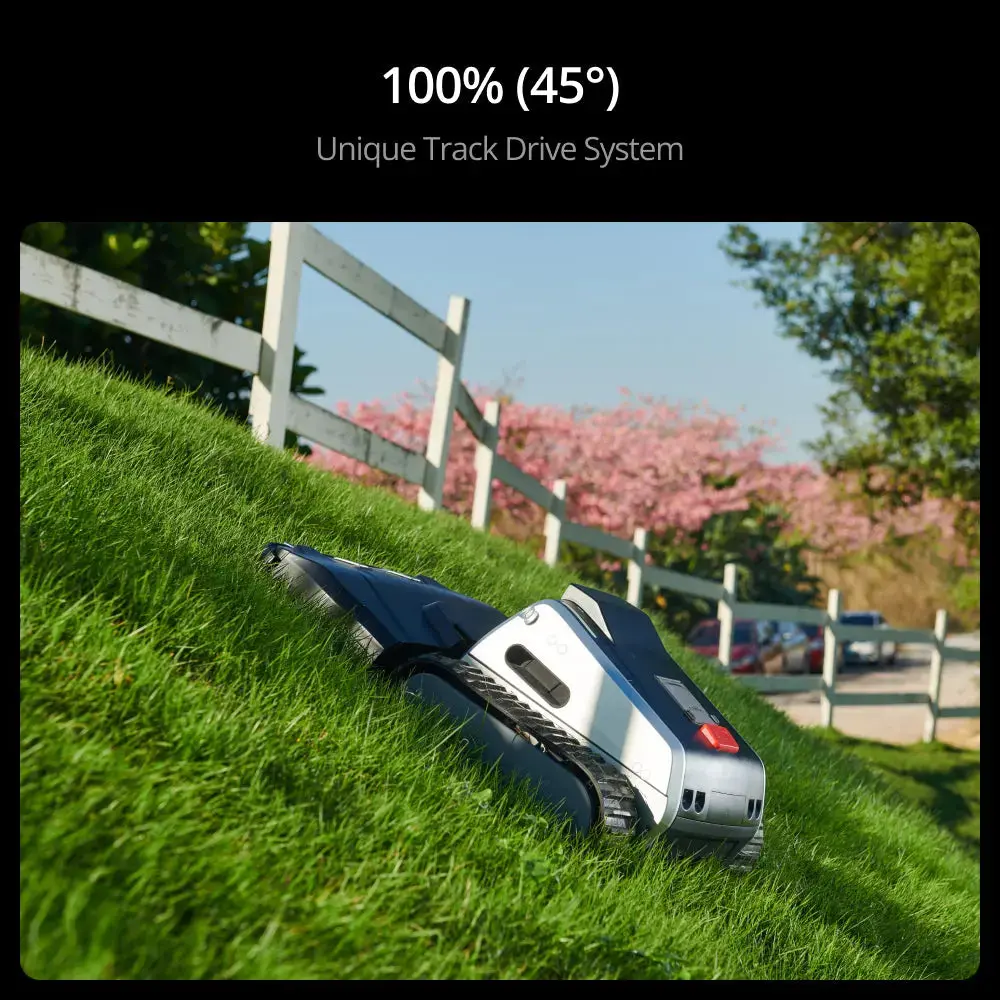
The tracked drive is not a cosmetic choice. Lymow rates the One Plus for 45 degree slopes, 2.8 inch obstacle crossing, gravel, roots, branches, uneven ground, and mowing speeds up to 3.3 feet per second. The wider contact patch should help on loose soil where a wheeled robot can get bogged down in the grass and dig in. The trade is that tracks can scuff soft turf if turning logic is abrupt or the lawn is saturated. Some users praise the mower for steep berms and rough acreage. Others want gentler acceleration and better traction logic on shorter grass. These are things that could be resolved with software updates over time. But for now, the One Plus is probably best suited for established turf with slopes, dips, roots, and thick grass. A delicate new lawn with wet clay and tight turns is a less natural fit in its current state.
Navigation & Mapping
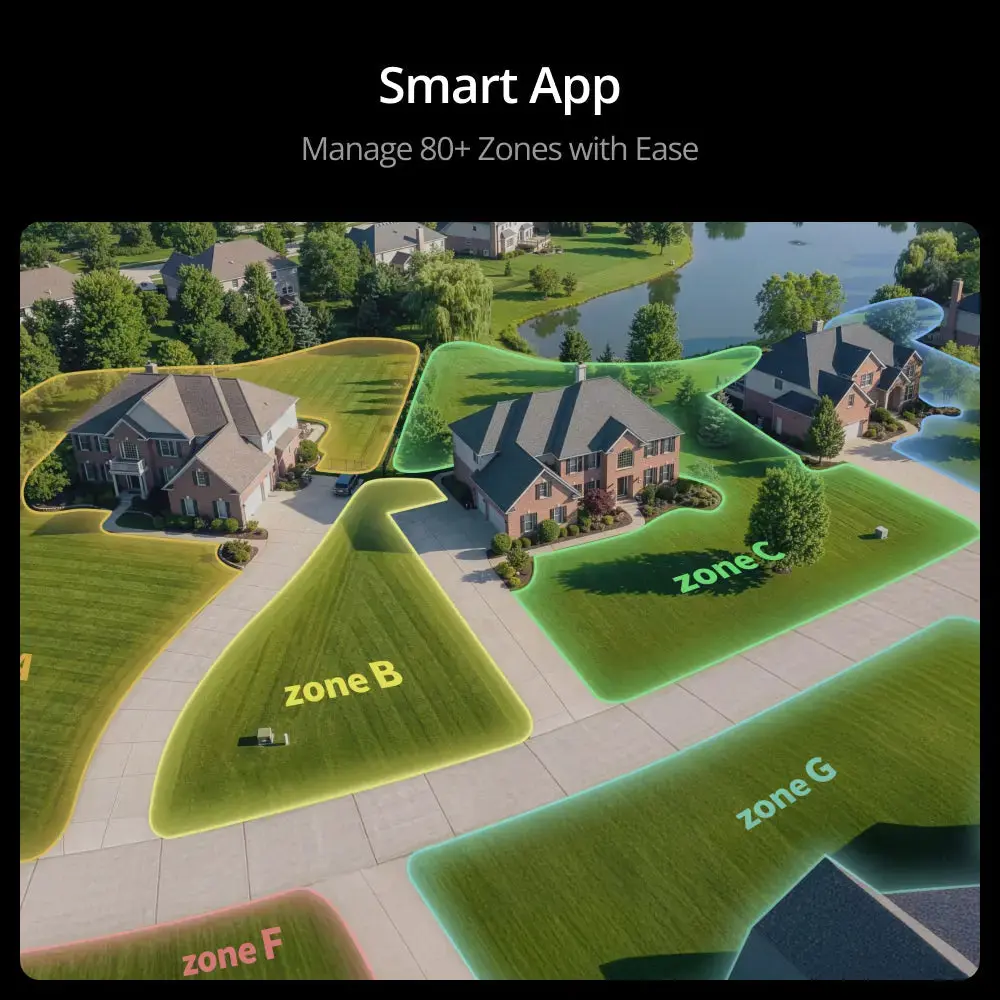
The One Plus uses RTK plus VSLAM, so it can map virtual boundaries without a buried perimeter wire. The spec sheet lists up to eighty zones, fifteen acres of map storage, Bluetooth, WiFi, 4G, and limited mowing without RTK for 0.025 to 0.037 acres or up to ten minutes. That last spec is important because the mower can survive brief signal drops (but this should not be treated as independent of RTK placement). Reddit owners say the best results come from a clear, sturdy RTK install, careful dock placement, zone overlap, and no go areas around fixed objects. The app is capable but there is still room for it to mature. It is known to sometimes suffer from WiFi binding trouble, app refresh bugs, and boundary editing that still feels hands on. This is a robot mower for an owner who is willing to tune the yard map until these wrinkles get ironed out.
Safety
Safety is strong in hardware terms. It includes AI vision, five ultrasonic sensors, two Hall sensors for cliff detection, off ground detection, rain sensors, an improved bumper sensor, geo fence alerts, device lock, and live GPS tracking. Those systems help the mower see toys, pets, garden objects, edges, and theft movement. They do not change the nature of the cutting deck. Dual rotary blades have more authority than pivoting razor blades, so yard prep is part of safety. I would clear hoses, dog toys, stones, branches, sprinkler heads, pet bowls, and loose edging before scheduled mowing. I would also avoid running it while children or pets are active on the lawn. Owner feedback adds one caution: at least one user felt rear and side sensing was less convincing during backing and perimeter work. That is a reason to use generous no-go zones.

Battery Runtime
The battery is not just a runtime spec. Lymow uses a 35.2-volt, fifteen amp-hour LiFePO4 pack, which works out to roughly five hundred twenty eight watt hours. The official rating is three hours per cycle, 0.57 acres per charge, 1.73 acres per day with the ten amp charger, and more than two thousand charge cycles. The five amp charger takes about one hundred fifty minutes from 10% to 90%. The ten amp charger cuts that to about ninety minutes. LiFePO4 chemistry is the right match for a mower that may cycle often in heat, because lithium iron phosphate is generally less prone to thermal runaway than nickel or cobalt based chemistries. It also tends to give up energy density for stability and cycle life.

The charging temperature range deserves attention. Lymow lists charging from 37 degrees Fahrenheit to 134 degrees Fahrenheit, while discharge is listed from 1 degree Fahrenheit to 134 degrees Fahrenheit. That means the mower may still operate in colder conditions where charging is restricted. Some Reddit charging complaints line up with that reality, especially reports from owners trying to charge around freezing conditions. Other reports do not fit cold weather neatly. Owners have described docks that connect but do not initiate charging, possible moisture sensor behavior, firmware timing issues, and cases where manual resets were needed. The One Plus moves charging contacts to the top compared with earlier hardware, which should reduce grass and moisture contamination. Early owner reports still suggest docking reliability is worth watching.
How It Compares
Mammotion LUBA 2 AWD is the closest mainstream rival because it also avoids perimeter wire and targets complex lawns. Mammotion lists all-wheel drive, eighty percent climbing ability, a four hundred millimeter cutting width, Vision plus RTK, ultrasonic radar, bumper sensing, and about one hundred eighty minutes of mowing time per charge on some versions. Lymow answers with tracks, a forty five degree rating, higher listed peak cutting power, a rotary deck built around airflow lift, and LiFePO4 cycle life. Segway Navimow X3 looks more polished as a consumer ecosystem, with model runtimes from one hundred twenty to two hundred forty minutes and strong app centered convenience. Husqvarna Automower 435X AWD brings a mature service base, ultrasonic object detection, GPS theft tracking, and one hundred forty five minutes of typical mowing, but it uses a physical boundary wire and a much narrower razor blade cutting setup.
Vetted Verdict
Lymow One Plus makes the most sense for a lawn that exposes the limits of ordinary robot mowers. Thick Bermuda, St. Augustine, roots, berms, gravel edges, dips, and larger zones all point toward its core strengths. The tracked drive gives it grip that wheeled robots have to fight for. The rotary deck gives it cutting authority that razor disc robots cannot fully copy. The LiFePO4 pack gives it a durability angle that is rare in this category. Setting it up well will provide a much better experience than rushing through setup. Docking and charging deserve attention during the first weeks. The buyer of this mower is the one who is excited to use bleeding-edge gear and who is willing to invest some time into getting it to work well with their situation. This is a great device for someone who wants real mowing power, accepts early robot tuning, and has a yard tough enough to justify what Lymow built.