Cosmo Review: A Kids Smartwatch Built Around GPS Safety and Zero Internet Access
Cosmo makes GPS smartwatches that let kids call and text approved contacts while parents track their location in real time. No social media, no open internet.

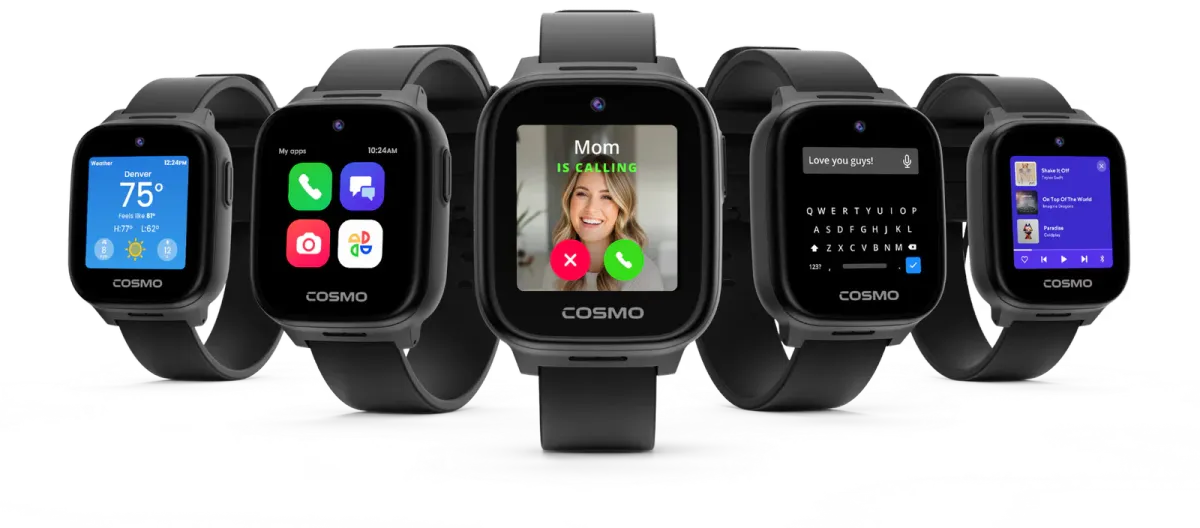
Cosmo builds smartwatches designed for one specific gap in the market: the years between "too young for a phone" and "old enough for a smartphone." Every device in the lineup runs on Cosmo's own family-safe mobile service, meaning kids get real calling and texting with GPS tracking built in, while parents get a dedicated app that shows exactly where their child is without handing over an open internet connection.
Cosmo at a Glance
What We Liked
- HaloGPS with a dedicated chip delivers precise, real-time location tracking across all devices
- School-Fi mode blocks distractions during class time automatically
- No social media, no open internet, and contact approval keeps the experience genuinely child-safe
- 3-year warranty and 30-day returns on every watch in the lineup
What Could Be Better
- Every watch requires an ongoing Cosmo membership plan plus a one-time activation fee, which adds to the total cost of ownership
- The ecosystem is closed by design, so it only works within Cosmo's own service and app
How Cosmo Approaches the Kids Phone Problem
Most parents who research this category quickly realize the options are either too simple (basic GPS trackers with no communication) or too risky (a full smartphone with all the distractions that come with it). Cosmo's answer is a walled-garden approach: the watch runs on its own cellular service called Cosmo Mobile, which uses FlexSIM technology to roam major networks including AT&T and US Cellular. Kids can make calls and send texts, but only to contacts a parent has approved. There is no browser, no app store, and no social media.
The Cosmo parent app sits at the center of everything. It handles GPS tracking, contact management, geofence alerts, and School-Fi, a feature that puts the watch into a distraction-free mode during school hours. The brand describes itself as built by parents, which comes through in how the feature set is prioritized: location accuracy and communication controls come first, entertainment comes second. App Station does allow music, so the watch isn't purely utilitarian, but the guardrails are always on.
JrTrack Pro Kids Smart Watch
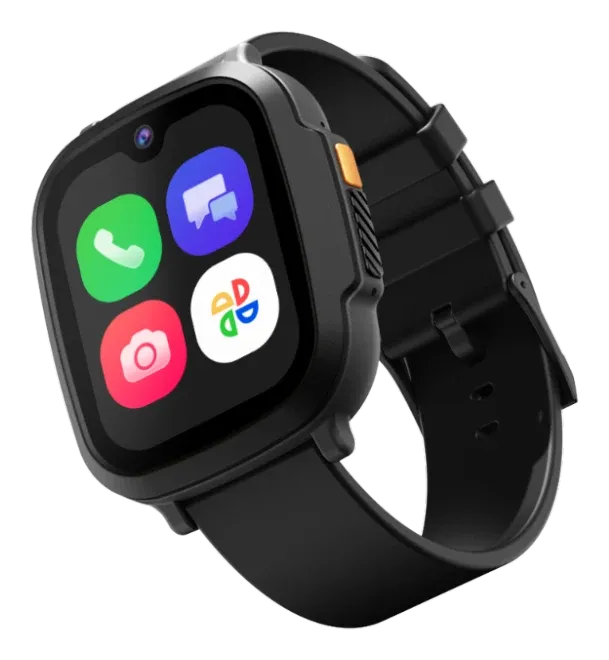
The JrTrack Pro is the most capable device Cosmo has produced. The hardware specs reflect a clear step up from earlier generations: a 52 × 43 × 12.8 mm body houses a 1.78-inch OLED touchscreen at 368 × 488 resolution, which is large enough to accommodate a full keyboard for texting. The 730 mAh battery is rated for up to 48 hours on default settings, and Cosmo notes that figure represents more than double the capacity of an Apple Watch. For a device that needs to stay on a kid's wrist all day without a charging reminder, that runtime matters.
Waterproofing is where the Pro makes its most meaningful argument over the competition. It carries triple certification: 3 ATM, IP68, and IP69K, which means it is rated for pool submersion, rain, and high-pressure water jets. The 5 MP camera handles photos and video, and Cosmo upgraded both the speaker and amplifier for clearer call audio. Safety features are the same stack found across the lineup: HaloGPS Active Tracking, geofences, SOS alerts to all guardians, and School-Fi, but they run on the most polished hardware Cosmo has shipped.
The Pro is the right choice for families who want the longest battery life, the best screen, and the most durable build. It requires the same Cosmo membership as every other watch in the lineup, so the ongoing service cost is identical. The thinner profile (12.8 mm) also makes it more wearable for older kids who care about how a watch looks on their wrist.
JrTrack 5 SE Kids Smart Watch
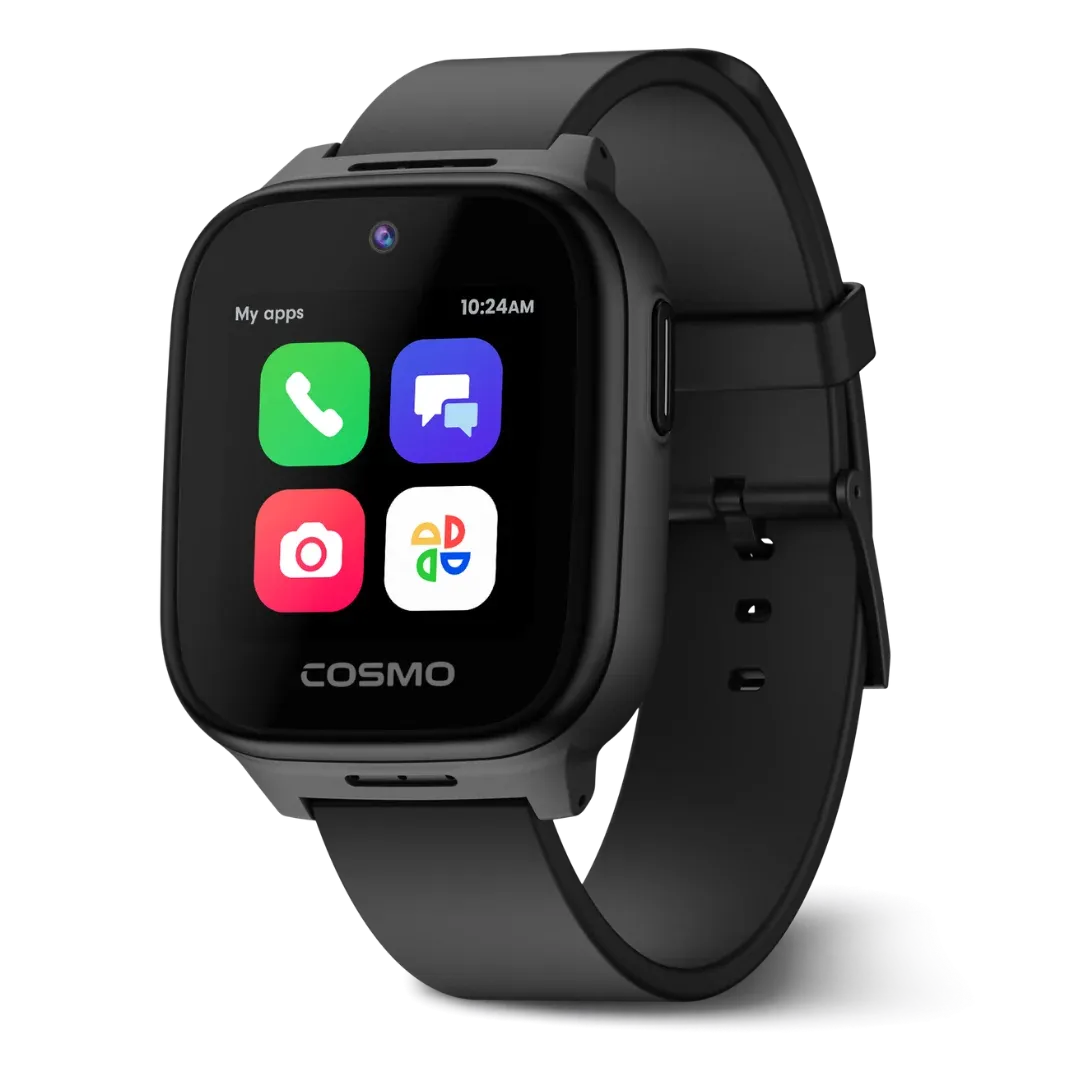
The JrTrack 5 SE is built on the same hardware platform as the JrTrack 5 but pairs it with Cosmo's completely redesigned parent app. The body measures 52 × 42 × 15.8 mm, making it noticeably thicker than the Pro, and the 1.4-inch touchscreen is smaller. Battery life runs 18 to 24 hours on default settings, which is enough for a full school day and an afternoon of activity but will need a nightly charge. The camera steps down to 2 MP, and water resistance is rated at IP68 to 1.5 meters rather than the Pro's triple certification.
What the SE does share with the Pro is the full Cosmo safety stack. HaloGPS Active Tracking, geofences, SOS alerts, School-Fi, and App Station are all present. The brand reports that Cosmo connects over half a million kids, parents, friends, and guardians, and the SE is the device most of those families are using. It also ships with a band color choice and an optional Adventure Bundle that adds a Launchpad Charging Stand and a screen protector, which is a practical add-on for younger kids who are harder on hardware.
The SE suits families who want the full Cosmo experience without the premium hardware investment of the Pro. For a younger child in elementary school who primarily needs a way to call home and be tracked on the walk back from a friend's house, the SE delivers everything that matters. Families with older kids who text frequently or spend time around water may find the Pro's larger keyboard and stronger waterproofing worth the difference.
Which Cosmo Watch Fits Your Family
The choice between the two watches comes down to how the child will actually use it. The JrTrack 5 SE covers the core use case well: GPS tracking, two-way communication with approved contacts, and school-time controls. The JrTrack Pro adds a significantly better screen, longer battery, a stronger camera, and the kind of waterproofing that holds up at the pool or beach without a second thought. Both carry a 3-year warranty and a 30-day return window, which is a reassuring policy for a product category where fit and comfort can only be judged once a child is wearing it.
It is worth being clear about the ongoing cost structure. Every Cosmo watch requires an active membership plan that covers unlimited talk, text, data, 24/7 GPS tracking, and access to the parent app. There is also a one-time activation fee at setup. That recurring cost is the tradeoff families accept in exchange for a purpose-built, closed ecosystem. For parents who want to avoid giving a child an unsupervised smartphone, Cosmo positions itself as a deliberate alternative rather than a cheaper one.
Vetted Verdict
Parents who are specifically trying to delay smartphone access while still staying connected to their kids will find Cosmo's approach well thought out. The combination of real cellular communication, precise GPS tracking, and hard limits on internet access is exactly what this category needs, and the JrTrack Pro in particular closes the hardware gap with mainstream wearables in a meaningful way. Families comfortable with a subscription-based service and a closed ecosystem will get a lot out of it. Those hoping for a one-time purchase with no ongoing fees should know upfront that is not how Cosmo works, and that cost structure is the clearest reason to pause before buying.